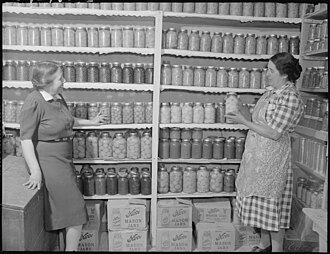
If you lived through the ‘50s, you probably already know this, but food prices in the 1950s were so low that reading about them will make you wish you had a time machine.
A few cents, which is nothing but pocket change today, got you a full meal back then. And a gallon of gas? Only cost about 30 cents. You could fill up an entire bag full of groceries for around $13.
Today, though, you’ll have to shell out more than $200 for the same bag. Here’s a comparison of food prices in the 1950s vs. today.
Key Takeaways
| – Massive Price Gap: In the 1950s, an entire bag of groceries cost approximately $13, compared to over $200 for the same items in 2026. – Staple Comparisons: A dozen eggs cost roughly ¢60 in 1950; by 2026, the national average reached $4.03. A loaf of bread has risen from ¢14 to over $1.80. – Meat & Poultry: In the mid-50s, chuck roast was only ¢50 per lb. and frying chicken was ¢46 per lb. Today, those prices have climbed to approximately $8.77 and $4.15 respectively. – Evolution of Shopping: The 1950s relied on local butchers, milkmen delivering glass bottles, and seasonal produce. Modern shopping offers year-round variety, plastic packaging, and digital payments. – The Rise of Convenience: The 1950s saw the birth of fish sticks, TV dinners, and boxed cake mixes (which cost only ¢29 in 1950), marking a shift toward pre-packaged “modern” eating. |
1950s Food Prices vs. Today
Can you imagine getting a fast food hamburger, a plate of fries, and a milkshake for less than a dollar? Seems impossible, right? And yet, this was the reality in the 1950s.
Let’s explore how much each individual grocery item cost throughout the decade.
Meat
Pre-packaged and frozen meat wasn’t as prevalent back then. Most housewives (because it was the housewives who did the shopping) went to local butchers to buy freshly-cut meat and minced them at home.
| Meat Type | Prices in 1950 (in cents) | Prices in 1955 (in cents) | Prices in 1959 (in cents) | Prices in 2026 (in dollars) |
| Round steak beef | ¢93.6 per lb. | ¢90.3 per lb. | ¢107.3 per lb. | $9.875 per lb. |
| Chuck roast beef | ¢61.6 per lb. | ¢50.1 per lb. | ¢64.1 per lb. | $8.773 per lb. |
| Beef hamburger | ¢56.6per lb. | ¢39.5 per lb. | ¢54.9 per lb. | $6.687 per lb. |
| Pork chops | ¢75.4 per lb. | ¢79.3 per lb. | ¢85.3 per lb. | $4.298 per lb. |
| Bacon (sliced) | ¢63.7 per lb. | ¢65.9 per lb. | ¢66.5 per lb. | $6.76 per lb. |
| Poultry, frying chicken | ¢46.1 per lb. | ¢46.9 per lb. | ¢42 per lb. | $4.153 per lb. |
| Lamb (leg) | ¢74.4 per lb. | ¢68.1 per lb. | ¢75.1 per lb. | $14 per lb. |
| Turkey | ¢49 per lb. | ¢39 per lb. in 1956 | – | $1.74 per lb. |
Curious how food prices compared in the ‘60s? Explore Classmates’ guide on the Cost of Groceries in the 1960s for a similar breakdown of prices.
Eggs
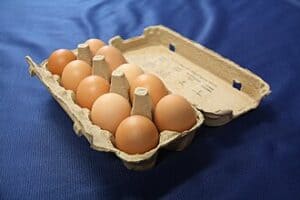
In 1950, a dozen eggs would only set you back ¢60.4. The prices of large, grade A eggs remained mostly stable in the middle of the decade as well, with a dozen eggs costing ¢60.6 in 1955. Towards the end of the decade, in 1959, their prices fell even further, standing at a mere ¢53.
In 2025, egg prices rose exponentially, averaging $5 per dozen. Thankfully, they’ve slid down in 2026. The nationwide average for a dozen eggs is currently $4.03, which is a decrease of more than a dollar.
Silver Spoon, CC BY-SA 3.0 https://creativecommons.org/licenses/by-sa/3.0, via Wikimedia Commons
Dairy Products
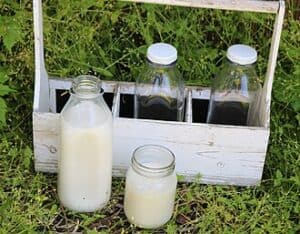
In the 1950s, you mostly had fresh milk delivered to your house everyday by a milkman (yes, they were real jobs back then). The milkman would deliver milk sourced from local dairy farms in glass bottles, and take the empty bottles away the next day.
NIAID, CC BY 2.0 https://creativecommons.org/licenses/by/2.0, via Wikimedia Commons
Alternatively, some people would drive down to the local dairy farm and fill up huge pails of milk.
| Product | Prices in 1950 (in cents) | Prices in 1955 (in cents) | Prices in 1959 (in cents) | Prices in 2026 (in dollars) |
| Fresh milk | ¢19.3 per quart | ¢21.9 per quart | ¢24.1 per quart | $4.047 per gallon |
| Delivered milk | ¢20.6 per quart | ¢23.1 per quart | ¢25.3 per quart | — |
| Butter | ¢72.9 per lb. | ¢70.9 per lb. | ¢75.3 per lb. | $4.408 per lb. |
| American cheese | ¢51.8 per lb. | ¢57.7 per lb. | ¢58.2 per lb. | $4.734 per lb. |
Fruits (Fresh and Canned)
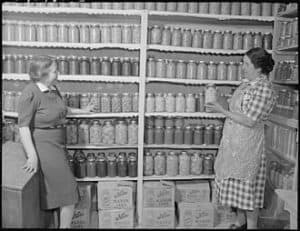
Despite what we might assume, in the 1950s, fresh fruits were available only seasonally. They were mostly bought from greengrocers and farmer’s markets.
The U.S. National Archives, No restrictions, via Wikimedia Commons
Canned and frozen fruits started gaining popularity due to seasonal limitations. So, if you wanted to eat a summer fruit during, say, spring, you had to rely on canned goods.
Fresh Fruits
| Fruits | Prices in 1950 (in cents) | Prices in 1955 (in cents) | Prices in 1959 (in cents) | Prices in 2026 (in dollars) |
| Apples | ¢12 per lb. | ¢15.1 per lb. | ¢14.2 per lb. | $2.52 per lb. |
| Bananas | ¢16.3 per lb. | ¢17 per lb. | ¢17 per lb. | $0.66 per lb. |
| Oranges | ¢49.3 per dozen | ¢52.8 per dozen | ¢66.4 per dozen | $1.59 per lb. |
| Grapefruit | — | ¢10 each | ¢13.3 each | $1.24 each |
| Strawberries | — | ¢31.5 per pint | ¢31.6 per pint | $3.6 per pint |
| Watermelon | — | ¢5 per lb. | ¢5.3 per lb. | $0.62 per lb. |
| Seedless grapes | — | ¢19.8 per lb. | ¢25.6 per lb. | $2.27 per lb. |
| Lemons | — | ¢18 per lb. | ¢18.9 per lb. | $1.976 per lb. |
Canned Fruits
| Product | Prices in 1950 (in cents) | Prices in 1955 (in cents) | Prices in 1959 (in cents) | Prices in 2026 (in dollars) |
| Orange juice | — | ¢33.9 per 46-ounce can | ¢49.7 per 46-ounce can | $4.64 per 46-ounce can |
| Peaches | ¢28.7 per 29 ounces | ¢34.1 per 29 ounces | ¢35.5 per 29 ounces | $2.78 per 29 ounces |
| Pineapple | ¢37.8 per 27 ounces | ¢33 per 20 ounces | ¢36.3 per 20 ounces | $1.68 per 20 ounces |
| Fruit cocktail | — | ¢26.5 per can | ¢27.6 per can | $2.62 per 15-ounce can |
| Dried prunes | ¢24.6 per lb. | ¢33.7 per lb. | ¢39.8 per lb. | $14.97 per lb. |
Vegetables (Fresh and Canned)
Like fruits, fresh vegetables were only available seasonally. There were also regional restrictions.
Iceberg lettuce, however, emerged as a year-round vegetable since it grew throughout the year, regardless of seasonal conditions. It quickly became the most consumed vegetable in the decade!
Fresh Vegetables
| Vegetables | Prices in 1950 (in cents) | Prices in 1955 (in cents) | Prices in 1959(in cents) | Prices in 2026 (in dollars) |
| Potatoes | ¢69.2 per 15 lbs. | ¢56.4 per 10 lbs. | ¢63.3 per 10 lbs. | $8.47 per 10 lbs. |
| Onions | ¢6.8 per lb. | ¢8.1 per lb. | ¢11.3 per lb. | $3.70 per lb. |
| Carrots | ¢10 per bunch | ¢13.9 per lb. | ¢14.4 per lb. | $0.56 per lb. |
| Lettuce | ¢13.9 per head | ¢15.4 per head | ¢18 per head | $1.97 per head |
| Sweet potatoes | ¢10.2 per lb. | ¢13.8 per lb. | ¢13.8 per lb. | $1.74 per lb. |
| Celery | – | ¢14.9 per lb. | ¢14.2 per lb. | $0.80 per lb. |
| Cabbage | ¢5.9 per lb. | ¢8.3 per lb. | ¢9.4 per lb. | $0.87 per lb. |
| Tomatoes | ¢24.3 per lb. | ¢27.4 per lb. | ¢29.6 per lb. | $1.84 per lb. |
| Green beans | ¢21.8 per lb. | ¢22 per lb. | ¢25.6 per lb. | $2.99 per lb. |
Canned Vegetables
| Product | Prices in 1950 (in cents) | Prices in 1955 (in cents) | Prices in 1959 (in cents) | Prices in 2026 (in dollars) |
| Canned tomatoes | ¢14.7 per can | ¢15.1 per can | ¢15.5 per can | $3.49 per can |
| Canned peas | ¢14.8 per can | ¢21.5 per can | ¢20.4 per can | $1.49 per can |
| Dried beans | ¢15.3 per lb. | ¢17 per lb. | ¢17.2 per lb. | $1.99 per lb. |
| Canned corn | ¢17.7 per can | ¢17.1 per can | ¢19.3 per can | $1.49 per can |
Seafood
In the 1950s, the fish man was a common sight. He was basically a fishmonger who would go around in his truck, selling seafood to people. This was the decade when fish sticks were invented, and dishes like tuna casserole and shrimp cocktails became popular.
This was mostly thanks to the US government’s publication called “Test Kitchen” with a variety of seafood recipes to encourage more citizens to eat fish.
| Seafood | Prices in 1950 (in cents) | Prices in 1955 (in cents) | Prices in 1959 (in cents) | Prices in 2026 (in dollars) |
| Canned pink salmon | ¢47.6 per 16-ounce can | ¢55.9 per 16-ounce can | ¢62 per 16-ounce can | $4.52 per 16-ounce can |
| Frozen ocean perch fillet | — | ¢42.8 per lb. | ¢47.5 per lb. | $10.08 per lb. |
| Frozen haddock fillet | — | ¢46.7 per lb. | ¢58.4 per lb. | $12.99 per lb. |
| Canned tuna (chunk) | — | ¢35.3 per 6.5-ounce can | ¢33.1 per 6.5-ounce can | $1.17 per 5 ounce can |
Baking Goods
awyu322, CC BY-SA 2.0 https://creativecommons.org/licenses/by-sa/2.0, via Wikimedia Commons
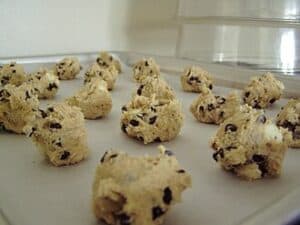
Baking was pretty much a house activity during the 1950s. Ever seen those pictures of women wearing aprons and taking out batches of cookies from the oven? Just add flour dust in the air and kids eagerly waiting to sample the cookies and lick the spoon clean, and it’ll feel like you’re back there.
| Product | Prices in 1950 (in cents) | Prices in 1955 (in cents) | Prices in 1959 (in cents) | Prices in 2026 (in dollars) |
|---|---|---|---|---|
| Wheat flour | ¢49.1 per 5 lbs. | ¢53.8 per 5 lbs. | ¢54.5 per 5 lbs. | $2.77 per 5 lbs. |
| Bread | ¢14.3 per lb. | ¢17.7 per lb. | ¢19.7 per lb. | $1.833 per lb. |
| Sugar | ¢48.7 per 5 lbs. | ¢52.1 per 5 lbs. | ¢57.2 per 5 lbs. | $4.925 per 5 lbs. |
| Vanilla cookies | ¢45.5 per lb. | ¢23.8 per 7 ounces | ¢24.4 per 7 ounces | $4.01 per 17 ounces |
| Biscuit mix | — | ¢27.3 per 20 ounces | ¢26.9 per 20 ounces | $2.32 per 20 ounces |
| Soda crackers | — | ¢27 per lb. | ¢29.1 per lb. | $3.98 per lb. |
Packaged baked goods also started being introduced in the market, with Betty Crocker, Pillsbury, and Duncan Hines emerging as popular names. A Betty Crocker cake mix cost just 29 cents in 1950, while frozen pie crusts were sold for 29 – 35 cents. Today, a Betty Crocker cake mix costs $1.47!
Some other readymade baked goods popular in the ‘50s included icebox cakes and Eggo waffles.
Breakfast Cereals
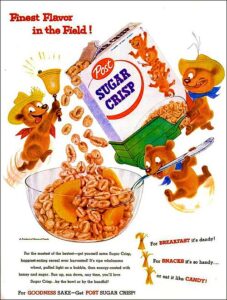
Cereals for breakfast were just as much a staple in the 1950s as they are today. But, unlike the organic, fortified options you get today, the ones from the ‘50s were chock-full of sugar.
In 1950, 11 ounces of cornflakes was sold for ¢17, while 20 ounces of rolled oats cost ¢16.2. In 1955, the prices increased slightly, with 12 ounces of cornflakes priced at ¢22, while 20 ounces of rolled oats was ¢19.1.
1950sUnlimited, CC BY 2.0 https://creativecommons.org/licenses/by/2.0, via Wikimedia Commons
By the end of the decade, in 1959, the prices increased even more. 12 ounces of cornflakes were ¢25.6, while 18 ounces of rolled oats was ¢20.5.
Today, you’ll have to pay $3.74 for a family-sized, 18-ounce cereal box. A 28-ounce bag of rolled oats, on the other hand, will set you back by a whopping $6.68!
Beverages
The ‘50s were known for their sodas, with brands like Coca Cola, 7-Up, Pepsi, Nehi, Royal Crown, Bubble Up, and Squirt dominating the market. And the cost? Just 5-10 cents a bottle.
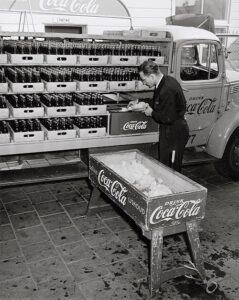
IISG, CC BY-SA 2.0 https://creativecommons.org/licenses/by-sa/2.0, via Wikimedia Commons
Coffee, of course, was another popular beverage. You could see the drink being advertised with the slogan “take a coffee break!” At the start of the decade in 1950, a pound of coffee only cost ¢79.4.
| Product | Prices in 1955 (in cents) | Prices in 1959 (in cents) |
| Coffee | ¢93 per lb. | ¢78 per lb. |
| Tea bags | ¢24.2 per package of 16 | ¢24.2 per package of 16 |
| Cola drink | ¢32.5 per 36-ounce carton | ¢29.2 per 36-ounce carton |
In 2026, you’ll have to shell out $3.57 for the same pound of coffee.
Chocolate
A 1-ounce chocolate bar was little more than a nickel in 1955 (¢5.2) and 1959 (¢5.1). Today, the same chocolate bar costs ¢88.6, which is quite a jump!
What Were Grocery Stores Like in the 1950s? Then vs. Now
Here’s how the grocery stores of the ‘50s differed from those of today:
- Smaller: Stores back then were way smaller compared to the behemoths of today.
- Less choice: There were no organic, gluten-free, and nut-free options available for every single product.
- No plastic: Liquids were sold in glass bottles, and items were bagged in paper bags.
- No barcodes or scanners: The staff had to manually enter the price of each product for billing.
- Cash or check only: There were no credit or debit cards used.
Fascinated by the 1950s? Check out this guide to the Best TV Shows of the ‘50s!
Journey Into the Past with Classmates®
Did this look-back at the food prices of the ‘50s make you yearn for a simpler time? You can do just that with Classmates’ archive of 480,000+ yearbooks from over the decades.
Browse through old yearbook pictures, search for and message school friends, and even plan your high school reunion with Classmates.
Register for free to get started.
Related Nostalgia Blogs:
All product names, logos, brands, trademarks and copyrights are property of their respective owners.