

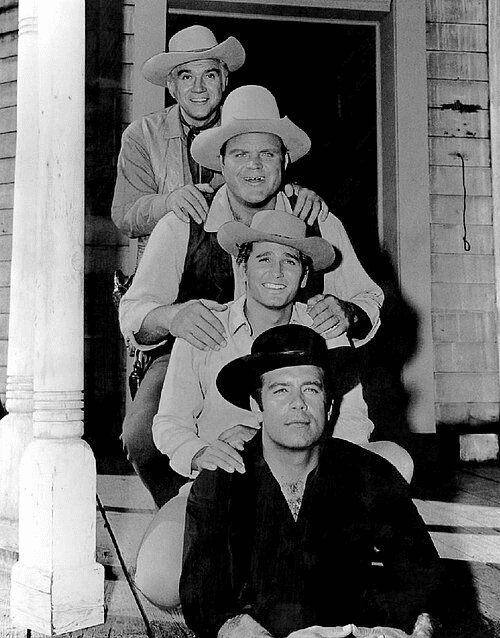
For many of us growing up in the 1960s, Sunday nights were defined by a single sound: the galloping rhythm of the Bonanza theme song. Long before there were hundreds of channels to choose from, families across the country gathered in their living rooms to visit the Ponderosa.
Whether you identified with the wisdom of Ben or the impulsive nature of Little Joe, the series left a mark on our collective memory. Join us as we look back at the show’s history, its iconic cast, and the behind-the-scenes moments that made it a television staple.
Key Takeaways
| – A Television Landmark: Bonanza aired on NBC for 14 seasons (1959–1973), producing 431 episodes. It remains the second-longest-running Western in U.S. network history and was the first to consistently tackle complex social issues like racial prejudice and mental health within a Western setting. – The “Color TV” Catalyst: As one of the first programs filmed entirely in color, Bonanza was used by NBC to drive the sales of color television sets. The vibrant cinematography of Lake Tahoe and the Ponderosa ranch became a primary selling point for the new technology. – Breaking Ground on Grief: In 1972, following the sudden death of actor Dan Blocker, Bonanza became the first television series to acknowledge the death of a major character within the storyline. Previously, shows would simply replace actors or have characters disappear without explanation. – Iconic Branding: The series is famous for its “burning map” opening credits and the galloping theme song. To facilitate the use of stock footage and stunt doubles, the cast wore identical “uniform” outfits from the third season onward, making their silhouettes instantly recognizable to fans. |
What is ‘Bonanza’?
Public domain, via Wikimedia Commons
Bonanza is a legendary American Western that aired on NBC for 14 seasons, running from September 12, 1959, to January 16, 1973. It holds the title of NBC’s longest-running Western and remains the second-longest-running Western in the history of American network television, trailing behind CBS’s Gunsmoke.
The show invited us into the lives of the wealthy Cartwright family on their thousand-square-mile ranch near Virginia City, Nevada. The title itself was a nod to the 1859 discovery of the Comstock Lode; a “bonanza” was the term miners used for a rich vein of silver ore found right near the fictional ranch.
What was it about?
NBC Television, Public domain, via Wikimedia Commons
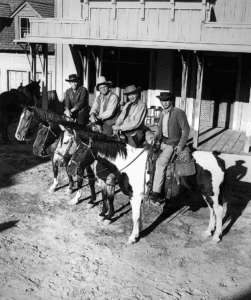
At the heart of the series was the thrice-widowed patriarch, Benjamin “Ben” Cartwright (Lorne Greene). He had three very different sons, each from a different mother of a different ancestry:
- Adam Cartwright (Pernell Roberts): The eldest and most urbane son was an architect who designed and built the family’s ranch house. His mother was Elizabeth Stoddard, the daughter of a New England sea captain, who tragically died just hours after Adam was born.
- Eric “Hoss” Cartwright (Dan Blocker): He was the warm and lovable giant of the family. His mother was Inger, a Swedish woman Ben met while traveling west. She was killed during a Native American attack while defending their group when Hoss was only an infant.
- Joseph “Little Joe” Cartwright (Michael Landon): The youngest brother was known for his hotheaded and impetuous nature. His mother was Marie, a French-American woman from New Orleans. She passed away following a horse accident when Little Joe was only five years old.
Rounding out the household was their loyal cook, Hop Sing (Victor Sen Yung).
Why was it so popular?

NBC Television, Public domain, via Wikimedia Commons
The massive success of Bonanza came down to great storytelling and perfect timing. While many other Westerns stuck to gunfights, Bonanza felt more like a weekly drama about a father and his sons. The show tackled “heavy” subjects that most programs wouldn’t touch in the ’60s, from racial bigotry and substance abuse to the harsh realities of war. It used the 1860s setting to tell stories about compassion and justice, and that heart is exactly what turned it into an American classic.
If you were one of the first families on your block to have a color TV, Bonanza was likely the show you used to show it off. NBC used the program to help sell color television sets for its parent company, RCA, and those picturesque scenes of Lake Tahoe were a major draw for viewers seeing their favorite characters in full color for the first time.
How long did it run?
Bonanza was a mainstay on television for 14 seasons, producing a staggering 431 episodes. This longevity earned it the title of NBC’s longest-running Western. In the broader history of American network television, it holds the spot for the second-longest-running Western ever. For nearly a decade, the show remained among the top five most-watched programs from 1961 through 1970.
Iconic Moments from the Ponderosa
For millions of fans, certain images from Bonanza are permanently etched in our minds. Whether it was the thrill of the opening credits or the more poignant family scenes, the show had a way of creating moments that felt like part of our own history.
One of the Most Famous Openings in Television History
Every Saturday (and later Sunday) night, the show kicked off with one of the most famous openings in television history. A hand-drawn map of the Ponderosa would suddenly burst into flames in the center, revealing the Cartwright brothers and Ben riding toward the camera. And, it just wouldn’t have been the same without that galloping theme song by Jay Livingston and Ray Evans — a tune that was eventually named one of the Top 100 Western songs of all time.
The Story Behind Those Iconic Outfits
If you ever noticed the Cartwrights seemed to wear the exact same thing every single week, you weren’t imagining it. From the third season onward, the characters stuck to a specific “uniform” (like Little Joe’s green jacket and tan pants or Hoss’s brown suede vest and ten-gallon hat). While it helped the crew reuse stock footage and made life easier for stunt doubles, it also made the characters feel incredibly familiar, like neighbors we saw every day.
Tackling the Tough Topics
One of the most memorable aspects of the show was its willingness to stand up for what was right. In the episode “Enter Thomas Bowers,” the Cartwrights helped a famous African-American opera singer who was being treated as a fugitive slave in Virginia City. In another powerful story called “The Fear Merchants,” the show addressed the brutal discrimination faced by Chinese immigrants who were just trying to fit into American society.
These were not just typical Western stories. Bonanza often used its 1860s setting to show the cruelty of bigotry against all kinds of people, including Native Americans, Jews, and the disabled. These lessons in humanity are a big reason why the show stayed in our hearts long after the credits rolled.
A Bittersweet Farewell to Hoss
One of the most difficult “moments” for the audience wasn’t on the screen. In May 1972, the sudden passing of Dan Blocker left a hole in the show that couldn’t be filled.
In a move that changed television history, Bonanza became the first show to ever address or even mention the death of one of its characters. While many programs at the time would replace actors or had characters disappear without a word, the producers felt the audience needed to grieve alongside the Cartwrights.
The premiere of the final season, a two-part episode titled “Forever,” was used to help the family (and the viewers) process the loss. Although the episode focused on a tragedy involving Little Joe, it featured many subtle, emotional nods to Hoss, including Ben looking longingly at a photo of his son.
The network tried to keep the show going by bringing back David Canary as “Candy” and adding Tim Matheson as a new character, Griff King, to appeal to younger fans. However, the magic was gone, and the ratings began to plunge. Many fans, along with Michael Landon and Lorne Greene, felt that Hoss was the soul of the all-male cast.
The show was abruptly canceled in November 1972, ending a fourteen-year run that changed television forever.
Where can you watch ‘Bonanza’ today?
If you want to head back to the Ponderosa, you’re in luck. Because it remains one of the most beloved shows ever made, Bonanza is still widely available in syndication. You can usually find reruns airing on networks like TV Land, Hallmark, and INSP.
You can also find all 14 seasons on the Best Westerns Ever Amazon Channel, FlixFling, fuboTV, Great American Pure Flix Amazon Channel, Philo, and Pure Flix. Some streaming platforms, including Plex, Tubi TV, and Hoopla, also play Bonanza for free.
Whatever happened to the cast?
The stars of the Ponderosa became household names, and many continued to find success long after the ranch closed.
Lorne Greene (Ben Cartwright)
NBC Television-photo by Elmer Holloway, Public domain, via Wikimedia Commons
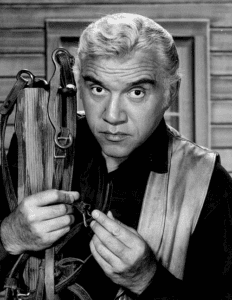
Before he was the Cartwright patriarch, he was famous as the “Voice of Canada” on the radio. He eventually traded the Old West for deep space, starring as Commander Adama in Battlestar Galactica. He stayed active in television and public service until he passed away from pneumonia in 1987 at age 72.
Pernell Roberts (Adam Cartwright)
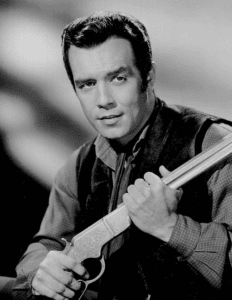
NBC Photo by Elmer Holloway. Public domain, via Wikimedia Commons
As the eldest and most intellectual brother, Roberts famously left the ranch after six seasons to pursue other interests. He eventually returned to TV as the star of the 1980s medical drama Trapper John, M.D He was the last of the original brothers to pass away in 2010.
Dan Blocker (Hoss Cartwright)
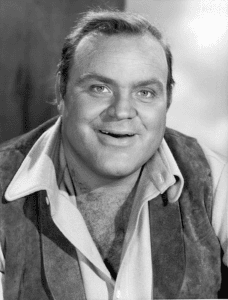
NBC Television, Public domain, via Wikimedia Commons
A Korean War veteran in real life, Blocker was the heart of the show. His sudden death at age 43 following surgery in 1972 was a shock that many feel the show never recovered from.
Michael Landon (Little Joe Cartwright)

NBC, Public domain, via Wikimedia Commons
The youngest Cartwright became one of the most powerful figures in television. He went straight from Bonanza to creating and starring in Little House on the Prairie and Highway to Heaven. He died in 1991 at age 54, just months after a pancreatic cancer diagnosis.
David Canary (Candy Canaday)
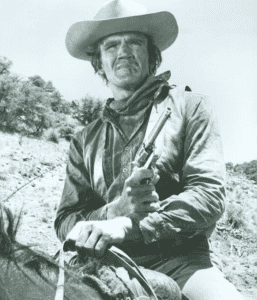
20th Century Fox, Public domain, via Wikimedia Commons
After playing the Cartwrights’ loyal ranch hand, Canary became a legend of daytime television. He won five Emmy awards for his role as Adam Chandler on All My Children and continued acting until he retired in 2010. He passed away from natural causes in 2015.
Tim Matheson (Griff King)
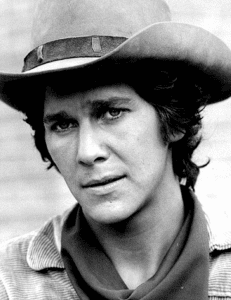
NBC Television, Public domain, via Wikimedia Commons
Matheson joined the cast for the final season as a young man looking for a second chance. He went on to a massive career in movies like Animal House and shows like The West Wing. He is still very active today as both an actor and director.
Mitch Vogel (Jamie Hunter Cartwright)
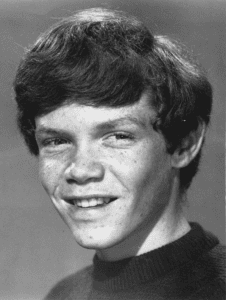
ABC Television Network, Public domain, via Wikimedia Commons
After playing the orphan Ben adopted in the later years, Vogel decided to leave Hollywood behind in his 20s. He has lived a quiet life away from the cameras for decades.
Guy Williams (Will Cartwright)
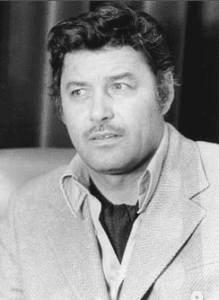
Unknown photographer, Public domain, via Wikimedia Commons
Though his time as a Cartwright cousin was short, Williams was already a star from his days as Zorro. He later starred in Lost in Space before moving to Argentina, where he lived until his death in 1989.
Fun Facts from the Ponderosa
Even the most dedicated fans might not know some of the behind-the-scenes secrets that made the show so unique.
- The Ponderosa Steakhouse chain was actually founded by Dan Blocker. The restaurants were originally named “Bonanza” before being sold and rebranded as Ponderosa.
- Michael Landon wore four-inch lifts in his boots during filming to appear closer in height to his much taller castmates.
- Fans noticed that any woman who fell in love with a Cartwright rarely stayed around for long. Most female love interests either died from disease, were killed off, or left town, leading viewers to joke about a family curse.
- While we all know the melody, the theme song actually had lyrics. A version with the cast singing was filmed for the pilot but cut, and even Johnny Cash recorded a version with his own words.
- Lorne Greene was very private about wearing a hairpiece. During a stunt where he had to jump into a lake, the hairpiece floated to the surface before he did. Crew members reportedly saw his hand reach up, snatch it underwater, and put it back on before he emerged.
- Producer David Dortort originally envisioned the show as a Western version of the King Arthur legend. He saw Ben as King Arthur and his three sons as the knights of the Round Table.
- Despite its later success, the show was nearly canceled after its first season due to terrible ratings in its Saturday time slot. It only became a hit after moving to Sunday nights in 1961.
Ready to Reconnect? Take Your Nostalgia One Step Further With Classmates
Looking back at Bonanza reminds us of a time when the whole family gathered around the TV to see what would happen next on the Ponderosa. Whether you were a fan of Little Joe’s antics or Ben’s wisdom, the Cartwrights felt like a part of our own lives.
What was your favorite episode? You might enjoy visiting Classmates® to see what your school’s yearbook looked like in the ’60s. It’s a great place to reminisce about the era, and you may even have a chance to reconnect with old schoolmates who remember those Sunday nights just as well as you do.
Related Nostalgia Blogs
All product names, logos, brands, trademarks and copyrights are property of their respective owners.


